megknobel.tumblr.com


Posted By Sam Ollinger on February 8, 2010
Shortly after Bike San Diego was launched we did a profile of one of the co-founders of San Diego’s only bicycle delivery service. Since the profile was run when our site was still in its infancy, we thought we’d run an update on Manivela Food Delivery to introduce some of our newer readers to Manivela.

Trevor Fray. Photo by mattlingo.com
Trevor Fray is the other half of Manivela Food Delivery. A resident of San Diego for the past fifteen years he has grown to love this city by traversing it in the best possible way: a bicycle.
Fray belongs to one of those rare but growing breed of individuals who chose to live in San Diego without an automobile. He has learned how to get around San Diego solely by bicycle and has based all his employment around his bike.
In addition to overseeing the day to day operations of Manivela Food Delivery, Trevor also works as a bicycle courier in downtown San Diego and at Pedal Pushing Bike Shop
For the past seven years, Fray has been a bicycle commuter getting more familiar with his city in a manner a growing number of San Diegans are beginning to.
When Matthew Reate initially approached Fray with the idea of opening a bicycle powered business in San Diego, they jointly decided to create the business that would promote certain core values that were important to the both of them. They wanted to open San Diegan’s minds to the possibility of using a bicycle for transportation and raise awareness toward bicyclists. They wanted to stimulate local businesses by delivering for small family owned businesses. Most importantly, they wanted to contribute to the growing San Diego bicycle culture.

Trevor Fray. Photo by mattlingo.com
In addition to delivering restaurant prepared meals, Manivela also fulfills the occasional grocery order. However, Manivela wants to be more than just a bicycle powered delivery service for restaurants. To that end, part of Fray’s focus has been to cater to the disabled and low income population in San Diego. This focus ties into his desire where he envisions that Manivela will eventually operate as a non-profit that not only performs delivery services by bicycle, but also teaches people to reconnect with their community. Fray wants to be a source for delivering food , necessities and entertainment needs to the segment of our population that is often forgotten about or ignored.
When I asked why he wanted Manivela to operate as a non-profit, Fray responded that he didn’t want profit or finances to dictate the goals of Manivela. He instead wanted to focus on the service component and be a source of help in the local community.
Using knowledge gained from working at Pedal Pushing, Fray envisions using the bicycle to empower San Diegans so that the bicycle can be used effectively as a means of transport and grow as a community.
—
Both Fray and Reate are doing wonderful things for the San Diego bicycle community and we wish them much success in their future endeavours. They eventually hope to expand to the San Ysidro within the next year and show other parts of metro San Diego that a bicycle powered business is not only possible but also the way of the future.

Trevor Fray. Photo by mattlingo.com


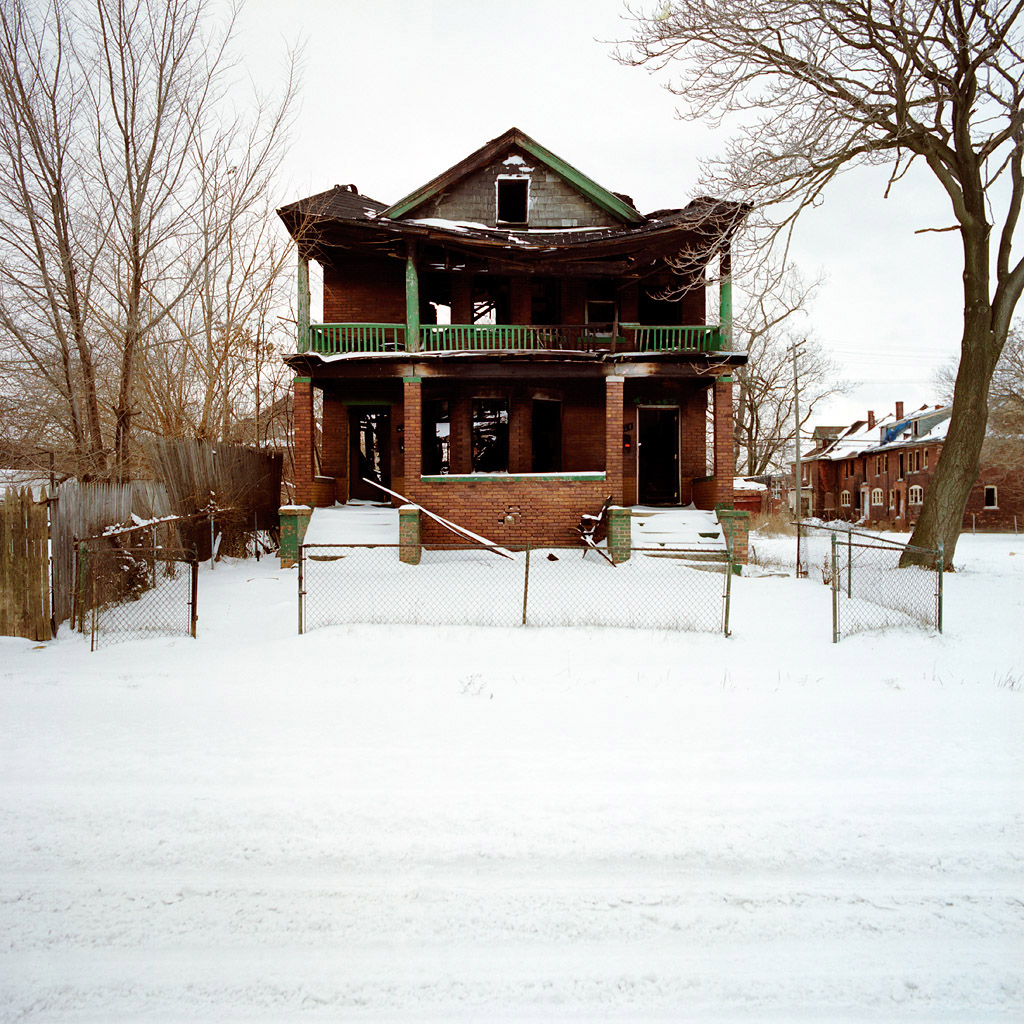
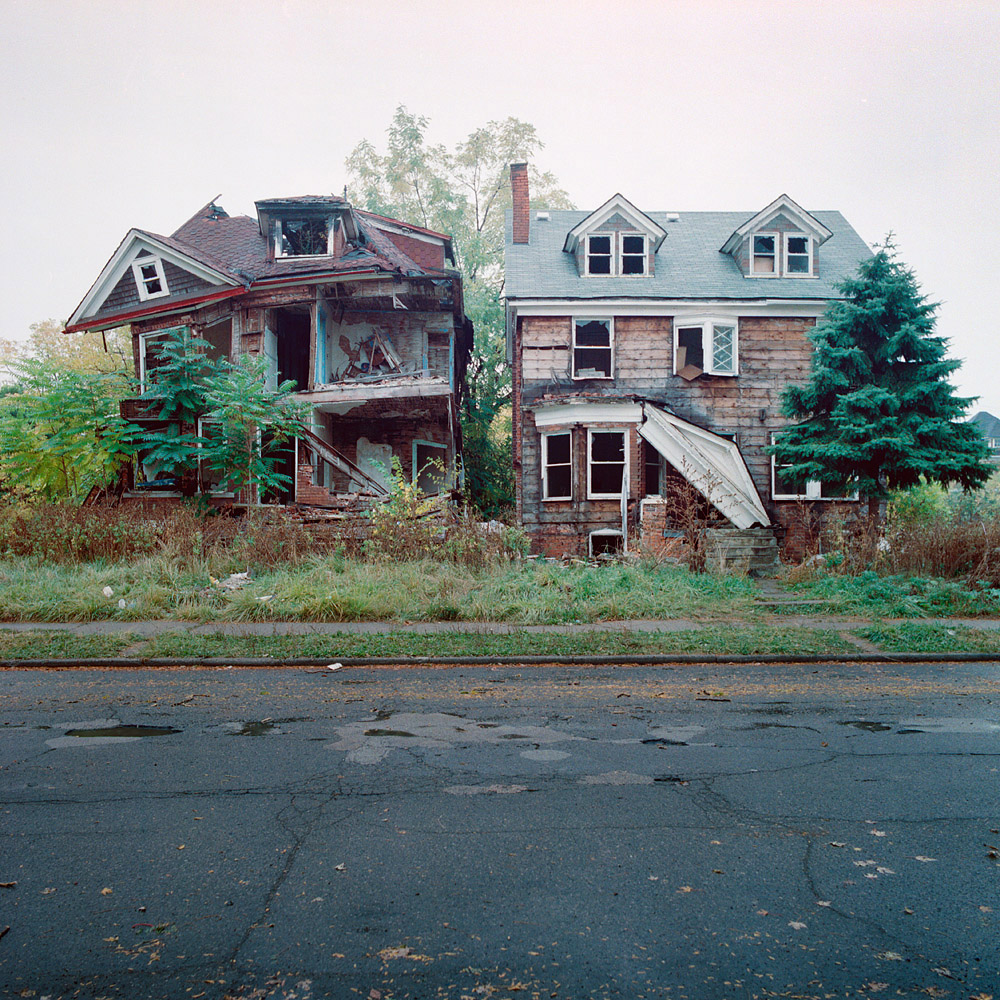
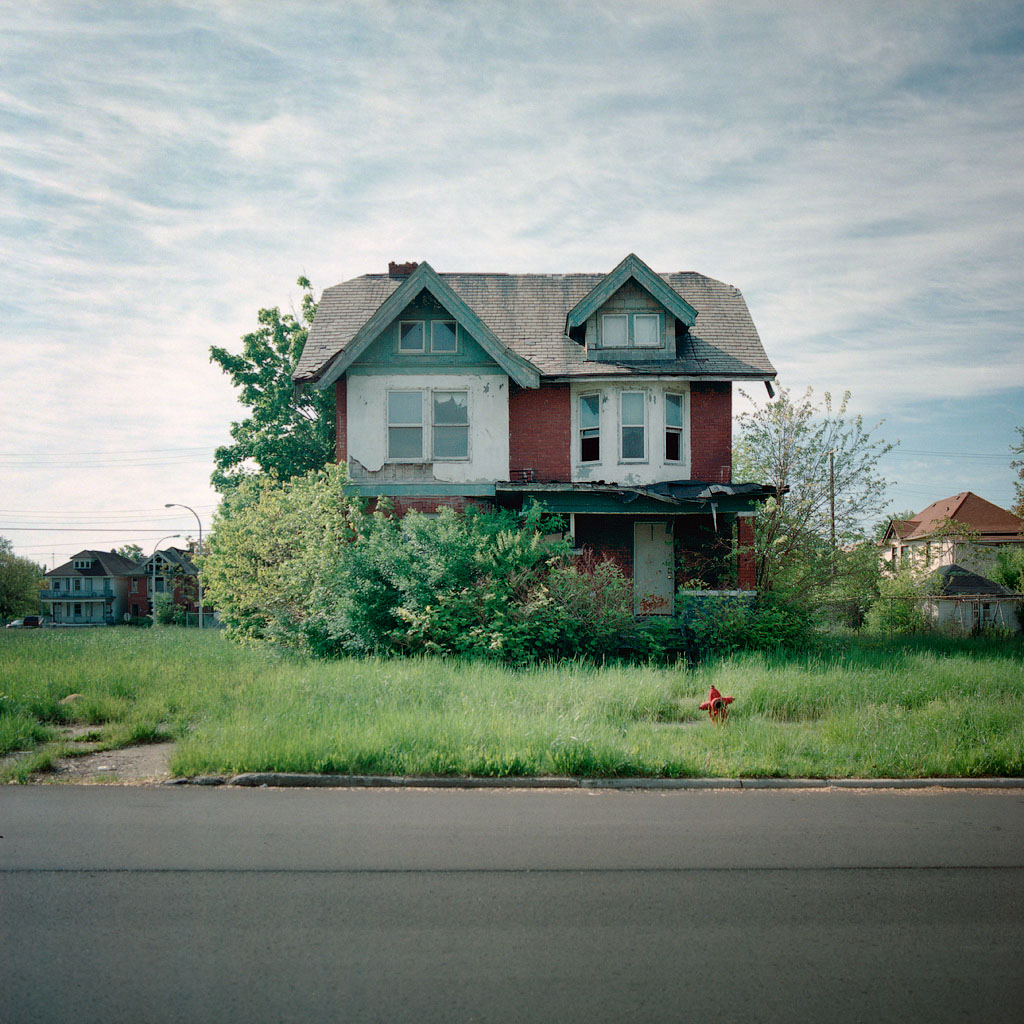
The abandoned houses project began innocently enough roughly ten years ago. I actually began photographing abandonment in Detroit in the mid 90’s as a creative outlet, and as a way of satisfying my curiosity with the state of my home town. I had always found it to be amazing, depressing, and perplexing that a once great city could find itself in such great distress, all the while surrounded by such affluence.
Brush Park, on the outskirts of Detroit’s entertainment district was always an area of interest to me. For as long as I can remember the area, housing large houses and mansions, sat largely abandoned just a stones throw away from the Fox Theater, and not far from Wayne State University, the Masonic Theater, and even the central business district. How could an area that was obviously once a wealthy enclave in the city become an example of the downfall of American cities?
For years the area had signs advertising the redevelopment that was about to take place. It finally began to happen, with the construction of the new ballpark for the Tigers, and Ford Field for the Lions. New condos, and town homes began to appear amidst the rubble of burned out mansions turned apartments. Some of the houses were so large they became “loft condos”. As the entertainment district flourished, and Brush Park began to transform into something new, I realized the other approximately 135 square miles of Detroit was largely ignored. The excitement about Detroit’s “rebirth” took center stage, while much of the rest of the city was becoming largely abandoned. Even Brush Park itself was still largely abandoned, but with the remaining tenants of Brush Park buildings being pushed out, and many of the old houses torn down, I moved on to other areas, where Detroiters were attempting to make a life among abandoned and burned out houses. Often times, the neighborhoods were almost completely abandoned. In these neighborhoods I encountered concerned citizens, packs of wild dogs, 20 foot high piles of toilets, and houses with the facades torn off, filled with garbage.
As the number of images grew, and a documentary style emerged, I switched from mostly black and white, to color, and decided to name the series 100 Abandoned Houses. 100 seemed like a lot, although the number of abandoned houses in Detroit is more like 12,000. Encompassing an area of over 138 square miles, Detroit has enough room to hold the land mass of San Francisco, Boston, and Manhattan Island, yet the population has fallen from close to 2 million citizens, to most likely less than 800,000. With such a dramatic decline, the abandoned house problem is not likely to go away any time soon.


 |
| living in San Diego! |


 | |
| Portfolio Samples |


